Eucalyptus Hill gets its name from one man's planting. Frederick Forest Peabody imported more than 7,000 eucalyptus trees from Australia and planted them on his property, along the road up to Solana, the mansion he finished in 1915 at the top of what became Eucalyptus Hill Road. His widow later married a man named Hale, and the couple gave 13 acres of that land to the City of Santa Barbara. Today it is Hale Park.
From October 2026 through January 2027, the City has scheduled vegetation work at Hale Park, and the first item on its list of target species is "invasive eucalyptus."
Higher in the foothills, Parma Park is going the other way with its own planted past. The olive trees from the Parma Ranch orchard, planted in the 1890s, have a named trail of their own. If you're walking off Thanksgiving dinner on the hill this week, you have two parks to choose from, and each is handling its oldest trees differently.
What the City Has Planned for Hale Park
The Hale Park work is listed under the City Parks and Recreation Department's Wildfire Resiliency Project, which also covers several other open spaces across Santa Barbara this season. The City describes Hale as a 13-acre park with a walking path, an ephemeral creek and eucalyptus woodlands. Its main vegetation types are coast live oak woodland, eucalyptus and non-native grassland.
The plan calls for crews to clear deadwood and invasive plants by weed whipping, hand cutting, hand pulling, chainsaw work, chipping, mowing, raking and bucking existing woody debris. The target list is longer than most visitors would guess: invasive eucalyptus, Canary Island St. John's wort, euphorbia, chasmanthe, castor bean, olive, pittosporum, jade plant and pepper trees. Keep olive in mind when you reach Parma.
The City held a community meeting on the Hale Park project on October 7, 2026. The City's published window for the work runs through January, so Thanksgiving weekend falls inside it.
This is the second round of attention Hale has had this year. Between March and June 2026, a sheep herd grazed about 16 acres spread across Hale, Parma, Franceschi and Laurel Canyon parks, spending a few days at each before moving on. The City has marked that project complete. If you followed the Eucalyptus Hill Improvement Association's own canyon grazing, covered in our August post on the neighbor-built side of the hill, this spring's sheep were a separate program on City parkland.
Hale Park as a Dog Walk
The reason most people know Hale has nothing to do with its trees. The City's park page lists an off-leash dog area, and the City's animal regulations page names Hale Park among its designated off-leash areas, along with Douglas Family Preserve and Elings Park. Both pages were last updated a few years ago, so check the signs at the entrance before you unclip the leash.
City park hours are sunrise to half an hour after sunset. With sunset coming early in late November, the useful hours on a weekday evening are short. The usual way in is the lower entrance on Camino Viejo. In a 2017 Noozhawk column, Ray Ford described it as the main access, with room for a handful of cars, and reported that the upper steps from Eucalyptus Hill Road had been removed in January 2016.
Parma Park and the Olives It Kept
Giovanni Parma, an Italian entrepreneur, bought the land in the late 1800s for a cattle ranch and olive orchard. His sons John and Harold gave the property to the City in 1973 to be used as a public park. At 198.59 acres, it is about fifteen times the size of Hale.
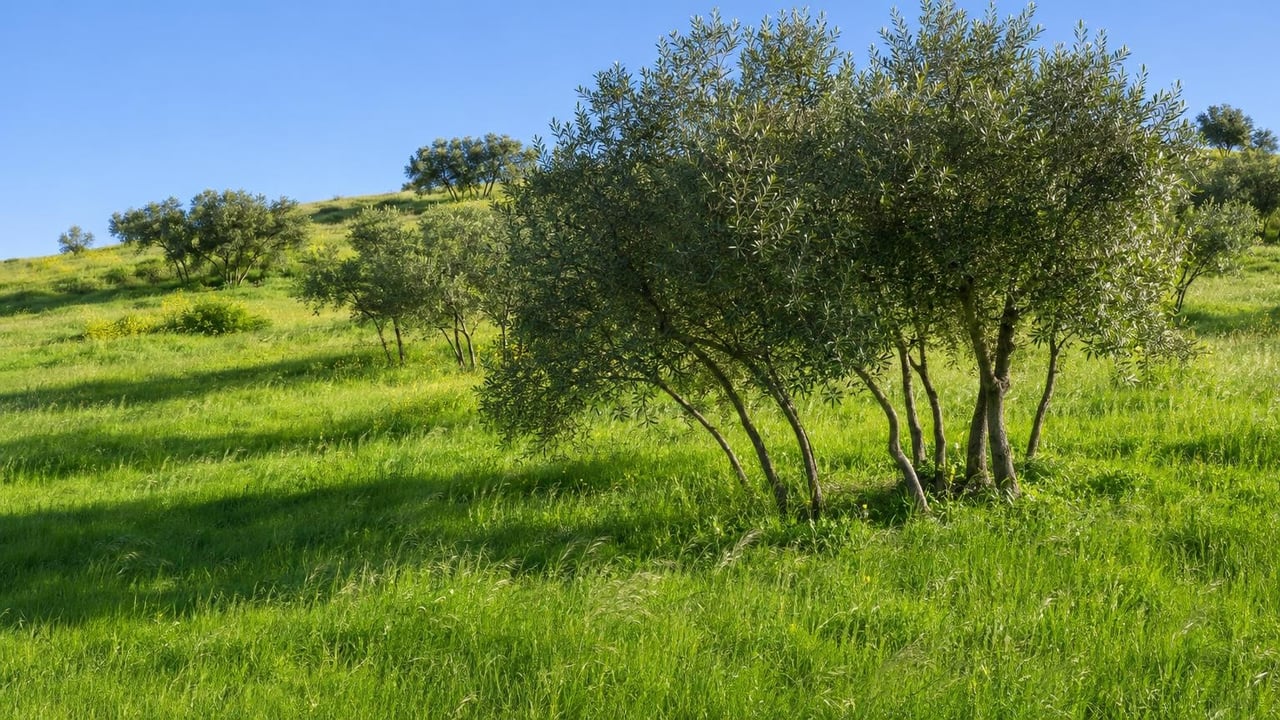
The Historic Olive Grove Loop runs half a mile through what remains of the orchard, with 90 feet of elevation gain. The City's description says the trees burned in the 2008 Tea Fire and have since grown back from the charred stumps. When the City finished its trail overhaul in 2024, the Santa Barbara Independent reported that the grove loop "is being maintained to preserve the land's history." The paper's photo captions showed new olive trees coming up out of the old stumps.
Olive is on the City's invasive removal list at Hale, alongside eucalyptus. At Parma, the olives regrowing from 1890s stumps are the reason a half-mile trail exists, and the City is keeping them as ranch history.
How the Parma Trails Got Here
The trails you walk at Parma today are recent. Before the Parma Park Sustainable Trails Project, the park's network was mostly old cattle paths and maintenance roads. The project, completed in July 2024, built nearly three miles of new trail and restored more than four miles of existing trail. It also turned four acres of non-native grassland into native scrub and grassland. Monique O'Conner, the City's Open Space Planner, said in the City's announcement that "many of the previous paths were never designed to be hiking trails."
Most of the money came from the Parma Park Trust, an endowment the Parma family set up in 2002, with a State Coastal Conservancy grant for the habitat work. The Independent also credited a CALFire grant. Most of the trail under your feet at Parma was paid for by the trust the family set up after the donation.
Choosing Your Parma Loop
Parma's main entrance is at 2066 Stanwood Drive, and there's a second entrance on El Cielito. Both have bike racks, which you'll need if you ride over, because bikes aren't allowed in the park. The land was given to the City for hikers and equestrians. Dogs must stay on leash, and hikers yield to horses.
For a short holiday walk with houseguests, the Plateau Trail is a 0.6-mile loop with 50 feet of climbing and a bench at a viewpoint. Horses aren't permitted on it. The two Sycamore Creek loops are also easy. The West Loop is 0.4 miles and partly shaded. The East Loop is 0.7 miles through mature oak, willow and sycamore, with several creek crossings in the wetter months. For the full climb, the Parma Peak Loop covers 2.6 miles and 450 feet of gain to an 800-foot summit with views of Santa Barbara, Montecito and the Channel Islands. The Coyote Creek Trail adds 0.7 miles, and the City's description mentions the sound of the creek in winter. If you see a paraglider overhead, the park has two designated landing spots.
There's one rule to keep in mind after a storm. The City asks walkers to stay off any trail where mud sticks to your shoes or a horse's hooves, because wet trails rut and erode. This spring showed why. On April 1, 2026, the City put out a call for up to 75 volunteers to repair the Sycamore Creek Trail and the Historic Olive Grove Loop after damage from winter storms. The volunteer day was set for April 18 at the Stanwood entrance, with partners including the Montecito Trails Foundation, the Los Padres Forest Association and SAGE Trail Alliance. Those two trails are the ones the City had to fix after the last wet season, so give them a few dry days after rain before you walk them.
The Same Program, Two Parks Over
Hale isn't the only nearby park getting attention this winter. Under the same program, the City has scheduled restoration planting at Franceschi Park, above the Riviera, from October 2026 through February 2027: about 800 native and site-appropriate plants, including coast live oak, lemonade berry and black elderberry. We covered that park's other changes in our September piece on Franceschi Park this fall. Across the foothills this winter, the City has invasive plants scheduled to come out in some parks and natives scheduled to go into others.
The hill gives you a reason to walk in late November. The Eucalyptus Hill Improvement Association's history explains that because these coastal foothills face south, the hillside gets strong winter sun, with the low sun reflecting off the ocean onto the slope. Peabody called his estate Solana, Spanish for "sunny place." The tree he brought to the hill by the thousands is on Hale Park's removal list through January, and Parma's ranch olives are staying where the Parma family planted them.
As a board member of the Eucalyptus Hill Improvement Association, I keep up with the parks, trails and projects around the hill. If you'd like to talk about the hill and the open space around it, Maureen McDermut & Associates would be glad to hear from you. Schedule a private consultation.