On November 20, 2025, about 125 people packed into Rincon Brewery to celebrate a nonprofit's 25th birthday and launch a fundraising campaign for land most of them had been walking, riding, and letting their dogs loose on for decades. Rincon brewed a limited batch called Save More Mesa Blonde Ale for the occasion, with proceeds going to the cause. A local artist's painting of the More Mesa bluffs sold at auction. Assemblymember Gregg Hart handed a longtime board president an award for, as he put it, keeping the torch alive for a very long time. The mood in the room was closer to relief than celebration, because the thing everyone in that room already understood was this: the open land bordering Hope Ranch's own trail entrances is not protected. It never has been. It is simply undeveloped, and undeveloped is not the same thing as safe.
That distinction is the story most descriptions of this neighborhood skip past. Hope Ranch's bridle paths, its private beach, its golf course wrapped around Laguna Blanca Lake all read as fixed features, the kind of amenities that just exist because the neighborhood has always had them. What the last year of local news actually shows is closer to the opposite. Almost nothing here holds its shape by default. It holds its shape because someone, usually a private association or a small nonprofit, keeps showing up to pay for it.
What's Actually Protected, and What Isn't
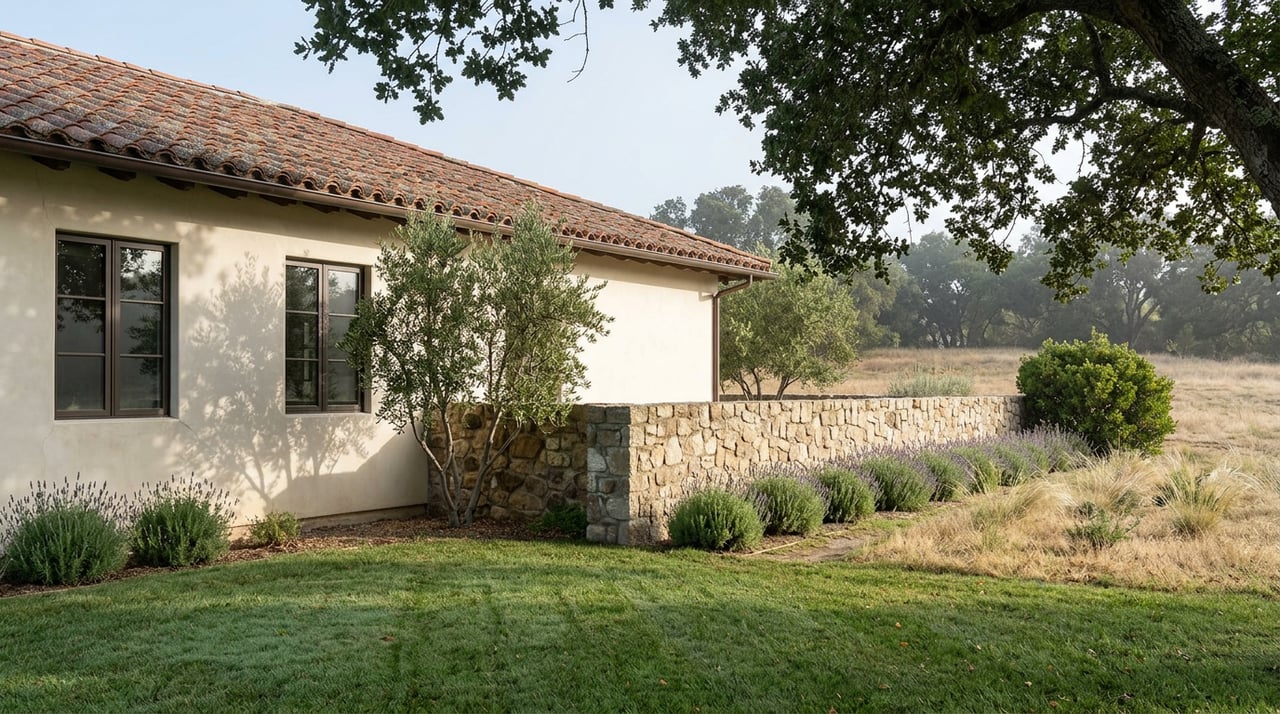
More Mesa is roughly 325 acres of coastal bluff, oak woodland, and grassland sitting just west of Hope Ranch. On October 12, 2025, Santa Barbara County, the Land Trust for Santa Barbara County, and the More Mesa Preservation Coalition announced a permanent conservation easement on 36 of those acres, the county-owned northwest corner. It was the first piece of the mesa to gain that kind of protection in its history, and it took a coordinated push from three separate organizations to get there.
The other roughly 265 to 270 acres, including the entire coastal blufftop and most of the level mesa, remain privately owned by a Saudi entity, Khalid Saud Al Shobily LLC, which bought the land in 2012 for an estimated $25 million. As of this year it's listed for sale at $65 million. County zoning currently allows up to 70 homes on a 40-acre section at the property's east end, near the entrances most Hope Ranch riders and walkers actually use: Puente Drive, Vieja Drive, and Mockingbird Lane. MMPC vice president Dan Gira has been direct about why the group pushed for the easement even on the small parcel it already controlled outright. He called it "an insurance policy" against state pressure to develop land the county has owned since 1992. The land didn't need saving from a private buyer. It needed saving from the possibility that its own government would eventually be forced to reclassify it.
That's the mechanism worth sitting with. MMPC isn't fighting a developer who wants to bulldoze a park. It's trying to raise tens of millions of dollars, ahead of the state's 2029 regional housing mandate, to buy land that current zoning already permits homes on. Whether that money materializes in time is genuinely unresolved. As of an April 2026 update, the 265-acre parcel was still listed and the coalition was still fundraising in earnest, holding events like a sold-out concert at the Lobero Theatre with roughly 650 people attending.
For anyone who enters or exits Hope Ranch through its western trail network, this isn't background news. It's a live question about what's on the other side of the fence line.
The three entrance trails most directly touching the private parcel:
- Puente Drive
- Vieja Drive
- Mockingbird Lane
If you use any of these regularly, MMPC's fundraising progress is worth tracking the way you'd track a zoning hearing for your own street, because in a real sense it is one.
The Club Runs on the Same Logic
The pattern repeats at the other pole of the neighborhood, on ground that couldn't feel more different: La Cumbre Country Club, the private course wrapping Laguna Blanca Lake at the visual center of Hope Ranch's north half. The course was laid out by George C. Thomas and William Bell and opened for play in 1916, which makes it more than a century old. The club has committed to a restoration under architect Todd Eckenrode, intended to bring the Bell and Thomas holes back toward their original design. Some accounts place the start of that work in 2026, though a later correction from club members pushed the timeline to 2027. Either way, the course visible from Via Laguna this year is still the course as it has stood for decades, not the restored version. Members credit a new director of agronomy, Paul Robertson, with a marked improvement in the greens over the past two seasons, ahead of any formal restoration work.
None of that renovation runs through a city budget or a county capital improvement plan. La Cumbre is a private club. Its upkeep, its agronomy staff, its multi-year restoration commitment, all of it is funded by member dues and club decisions, the same way MMPC's preservation campaign runs on donations rather than a line item in the county's parks budget. Hope Ranch's golf course and Hope Ranch's open space border are maintained by two entirely different organizations with nothing in common except the fact that both depend on private money choosing, year after year, to keep showing up.
The Rules of the Road, Literally
Drive Marina Drive and you'll notice something that only makes sense once you know the history: cars slow through blind corners well before a pedestrian or a horse comes into view. The default speed limit on most Hope Ranch roads is 25 miles per hour, and it's set that way because the neighborhood was designed from the start with horses as normal traffic, not an occasional exception. The Hope Ranch Riding and Hunt Club, founded in the 1920s by figures including Amy DuPont and Harold Chase, commissioned architect Reginald Johnson to design its clubhouse, and the riding culture that grew up around it has never really stopped. Today the Hope Ranch Riding and Trails Association maintains close to 27 miles of private bridle paths threading through oak groves and hillside terrain, connecting inland parcels to stretches near the coast.
That trail network exists because an association keeps grading it, clearing it after storms, and managing who can use it. Membership rules govern who can ride, guests need a host, and trainers have to register. It works the way most things in Hope Ranch work: not through a municipal parks department, since Hope Ranch is unincorporated and most county services here are limited, but through residents who organized themselves a century ago and residents who still fund the upkeep today.
The Beach You Don't Manage Alone
Hope Ranch Beach follows the same script. Water quality isn't monitored by a city health department running its own program. It's sampled weekly, year-round, through Santa Barbara Channelkeeper's Swim Guide, a volunteer-supported water testing effort that posts results publicly. The county's standing advisory, no swimming for 72 hours after a significant rain event, is the number worth remembering after a winter storm, more than any tide chart. And the one fixed point on the community's summer calendar, the annual family beach camp-out, isn't a county recreation department program either. It runs on the same do-it-yourself instinct that built the bridle trails a century ago: residents deciding something is worth doing, then doing it themselves, year after year.
What This Means If You Live Here
The Santa Barbara County Recreation Master Plan, a document meant to guide recreational land use decisions across the county for the next ten to twenty years, had its draft Environmental Impact Report open for public comment through August 10 of this year. That window has now closed, but the plan itself is still moving through the county process, and it's the kind of long-range planning document that ends up mattering to groups like MMPC when they're negotiating what happens next to land like More Mesa. MMPC has said it's preparing new research on the recreational use and ecological value of More Mesa, aimed at giving the county and potential future negotiators a clearer picture of what's actually at stake if the remaining acreage goes unprotected.
None of this requires action from someone who already lives in Hope Ranch and simply wants to keep riding the same trails and swimming at the same beach next summer. What it does require is not assuming any of it is guaranteed. The mesa west of the neighborhood is still, legally, a $65 million listing. The golf course restoration is still, financially, a members-only commitment. The trails are still maintained because an association's dues keep covering the grading and drainage work after every winter storm. If any of these threads goes slack, the character of this place changes in ways a zoning map wouldn't necessarily show until it's already done.
Maureen McDermut has served on the boards of Habitat for Humanity and the Eucalyptus Hill Improvement Association, work that comes from the same instinct running through More Mesa's fundraiser and the trail association's dues structure: the neighborhoods worth living in stay that way because people keep choosing to fund them. If you're weighing what a property here means for your family, or watching how these local threads might shape value over the next several years, Maureen McDermut welcomes a private conversation. Schedule a private consultation.