If a neighborhood can feel instantly recognizable, Santa Barbara’s Riviera is one of those places. You see the white stucco, red tile roofs, terraces stepping down the hillside, and view-facing rooms, and it all makes sense at once. If you are drawn to Spanish Revival homes here, it helps to understand that the appeal is not just architectural style. It is the way the home, the land, and the views work together. Let’s dive in.
Why the Riviera feels so distinct
The Riviera’s character was shaped on purpose, not by accident. According to a City of Santa Barbara historic-significance report, Charles Edwards donated 14 acres above Mission Santa Barbara, the streetcar line extended into the hillside, and the Riviera Company incorporated the area in 1913.
Over the next several decades, the area developed with a clear visual identity. The same city report notes that the Riviera Company encouraged white-stucco, terra-cotta-roofed Spanish Colonial Revival homes, along with underground utilities, oak planting, terracing, and lot orientations designed to protect views.
That planning still defines the neighborhood today. The Riviera covers about 634 acres, includes both Lower and Upper Riviera, and is made up mainly of single-family homes on large parcels built mostly between 1915 and 1975.
Spanish Revival in Santa Barbara
In Santa Barbara, the terms Spanish Revival and Spanish Colonial Revival often overlap. The city’s planning language typically groups the local tradition as Spanish Colonial Revival/Mediterranean, which helps explain why the style can feel both formal and relaxed at the same time.
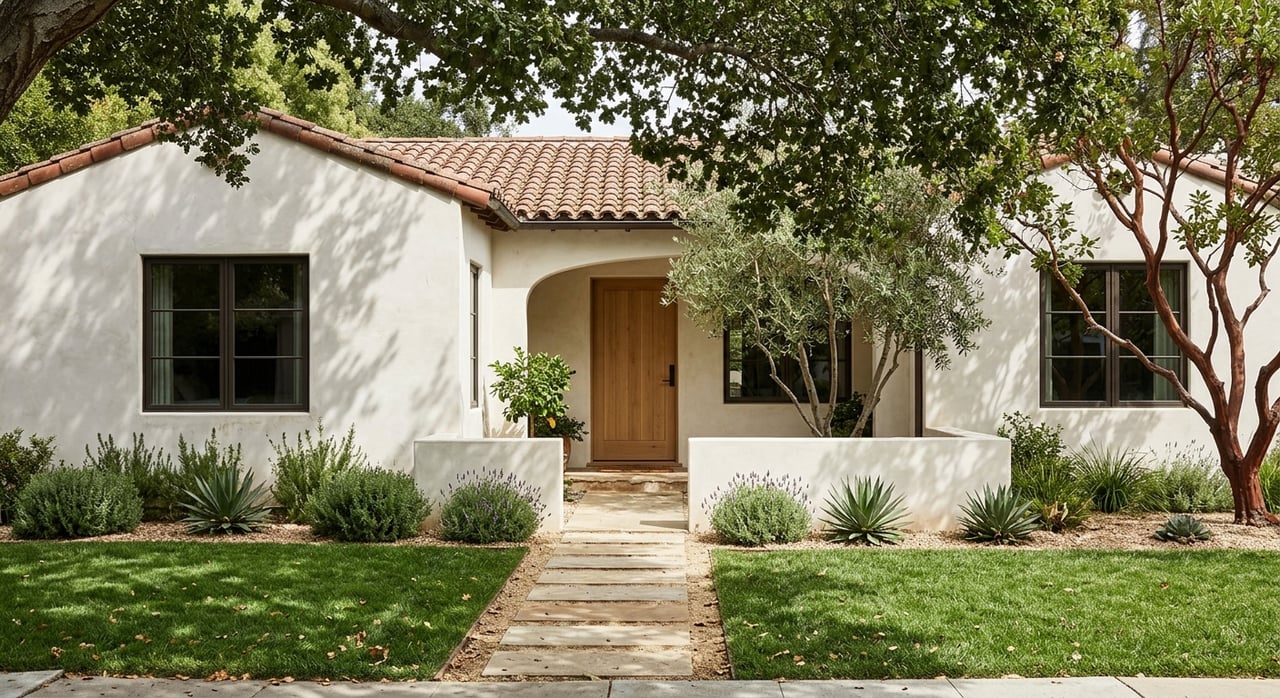
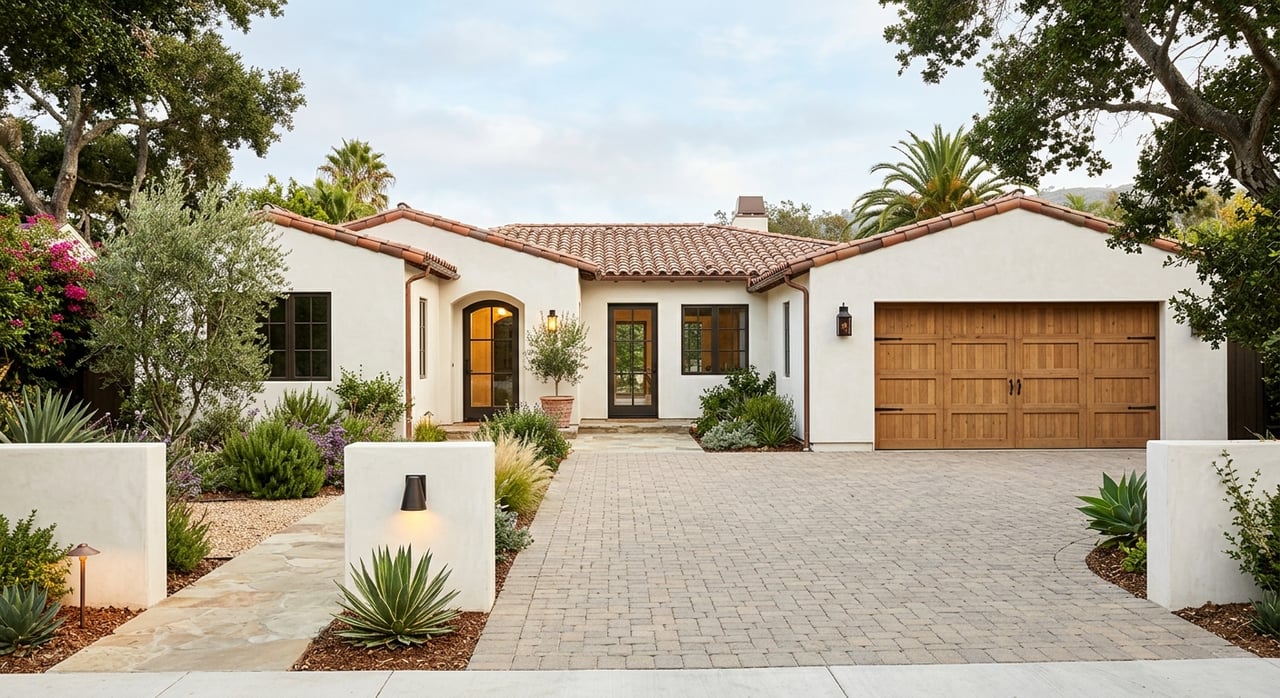
The city’s design guidelines describe several hallmark features. These include low-pitched roofs, usually 4:12 or less, asymmetrical massing, smooth whitewashed stucco walls, deeply recessed wood windows, wood entry doors with arched plaster or stone surrounds, decorative tile accents, iron or wood balcony railings, and red terra-cotta tile roofs.
On the Riviera, these details rarely read as surface decoration alone. They are part of a larger design approach that responds to the hillside setting and Santa Barbara’s long-standing architectural tradition.
The designers behind the look
Santa Barbara’s Spanish Colonial Revival legacy is tied to specific designers who helped define the city’s visual language. City guidelines identify George Washington Smith as a major figure of the 1920s, and the UC Santa Barbara architecture archive notes that Smith and Lutah Maria Riggs designed many of the area’s most recognizable residences.
That matters if you are buying or selling in the Riviera. Even when a home is not directly tied to a well-known architect, the neighborhood’s design standards and historic context still shape what feels authentic and lasting.
More than a facade
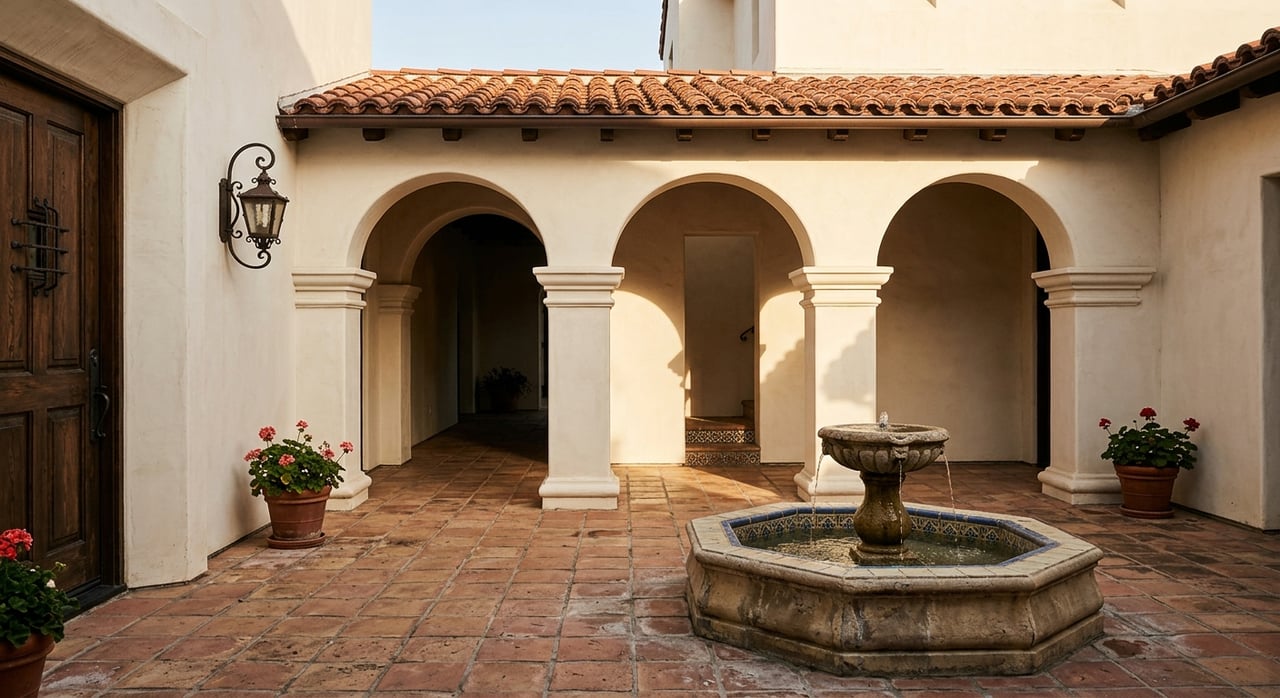
One of the most compelling things about Riviera Spanish Revival homes is that they are designed to create a sequence of outdoor and indoor spaces. Santa Barbara’s El Pueblo Viejo guidelines connect the city’s Spanish Colonial Revival and Mediterranean tradition to the white-washed cities of Andalusia and to building methods that respond to climate, materials, and daily life.
That is why courtyards, paseos, arcades, plazas, fountains, and brick or stone paving matter so much in this style. The architecture is meant to create shaded transitions and outdoor rooms, not just a picturesque street view.
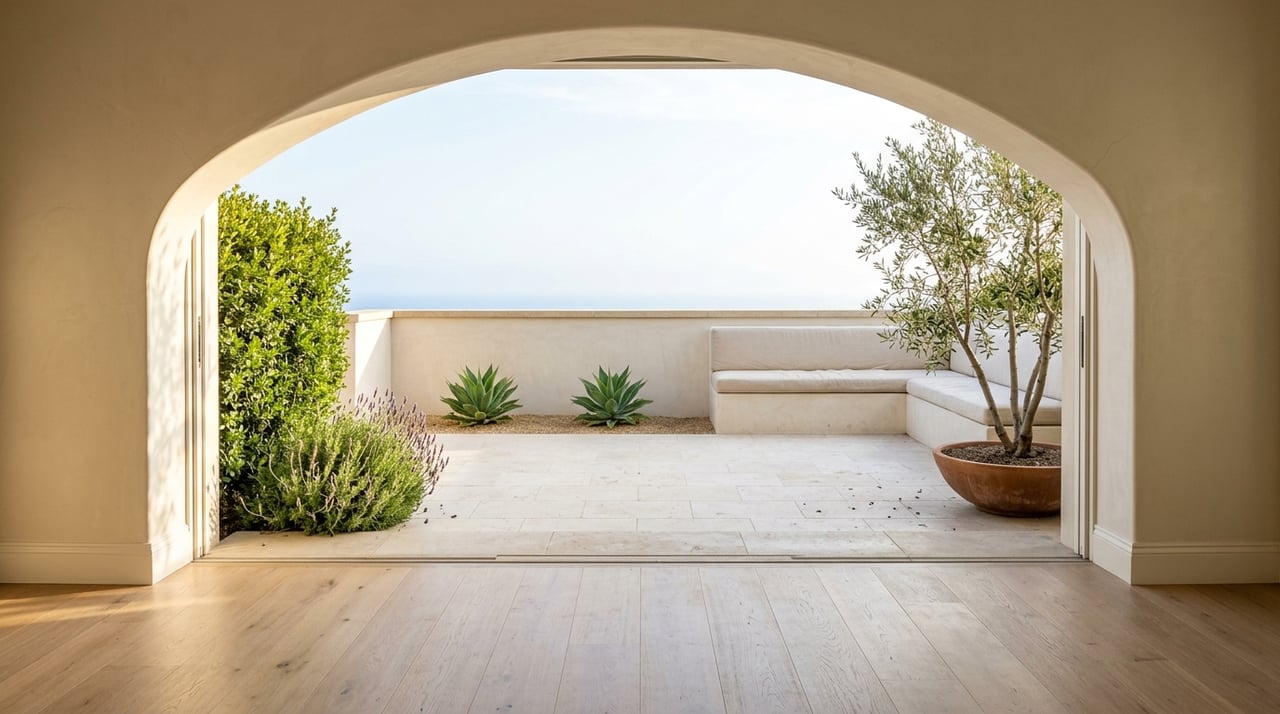
For you as a buyer, that often changes how a home lives day to day. Instead of one large flat yard, the experience may center on terraces, balconies, courtyards, and rooms that open toward the landscape.
How the hillside shapes daily living
On the Riviera, the site is part of the home. City reporting notes that lot orientations were planned to preserve views, and the neighborhood still offers broad outlooks toward downtown Santa Barbara, the Pacific Ocean, the Channel Islands, and the Santa Ynez Mountains.
This is one reason the Riviera feels so distinctly Santa Barbara. The best homes here do not simply sit on a parcel. They engage the slope through terraces, retaining walls, stairways, patios, and carefully placed windows or balconies.
The Upper Riviera’s steeply sloping hillsides and sandstone outcroppings also influenced the area’s walls, walkways, and street-and-lot pattern. In practical terms, that means beauty and complexity often come together.
What that can mean for buyers
If you are shopping for a Spanish Revival home on the Riviera, it helps to look beyond the romance of the facade. Pay attention to how you move through the property, how outdoor spaces connect to the interior, and how the home sits on the hillside.
A few useful things to study during a showing include:
- Roof pitch and tile roofing
- Stucco condition
- Recessed windows and openings
- Arches and balcony details
- Courtyard or terrace layout
- Slope relationship and retaining features
- Which rooms capture the primary views
These details are not just aesthetic. They often affect maintenance, comfort, privacy, and how naturally the home supports indoor-outdoor living.
Public spaces reinforce the Riviera lifestyle
Franceschi Park offers a clear public example of the Riviera’s landscape-and-view identity. The City of Santa Barbara describes it as a 17-acre park with picnic areas, walking paths, and panoramic views over the city, waterfront, and Channel Islands.
That setting reflects the same qualities many buyers seek in Riviera homes. The neighborhood’s appeal is deeply tied to topography, outlook, and the feeling of moving through layered outdoor spaces.
What sellers should highlight
If you are preparing a Riviera home for market, the most effective story is usually a specific one. Rather than relying on broad style labels, it is more useful to highlight the features buyers can actually see and understand.
For example, listing preparation and marketing notes should focus on measurable architectural elements and site relationships. Think roofline, tile roofing, stucco finish, recessed openings, arches, balconies, courtyards, and the way the home is positioned on the slope.
The city’s design guidelines allow creative interpretations within the tradition, but they still emphasize compatibility in site placement, form, scale, bulk, and materials. For sellers, that means the strongest presentation often connects design details to function, views, light, privacy, and flow.
Historic status and remodeling questions
Not every Riviera home has the same historic considerations. Some properties may have designation implications, while others may not, so verifying status early is an important step.
The City of Santa Barbara says Landmark and Structure of Merit designations were created to preserve streetscapes and building fabric. The Historic Landmarks Commission reviews exterior alterations to historic resources, while the Architectural Board of Review maintains design standards in the city.
If you are considering updates, this is especially important. Buyers should confirm what may affect future exterior changes, and sellers should understand how designation status may shape buyer questions.
Can newer homes still fit the Riviera look?
Yes, they can. The city’s Lower Riviera guidelines state that new buildings do not need to imitate historic styles, but they should remain visually compatible in location, massing, form, and materials.
That is an important distinction. A home can feel fully at home on the Riviera without being a literal copy, as long as it respects the scale, placement, and material character that define the neighborhood.
Why Spanish Revival still resonates here
Spanish Revival charm on Santa Barbara’s Riviera endures because it is rooted in place. The style fits the hillsides, frames the views, and creates an everyday rhythm of light, shade, terraces, and courtyards that feels natural in this setting.
For buyers, that means you are often choosing more than a house. You are choosing a way of living that ties architecture directly to site and scenery. For sellers, it means the right positioning should capture not only the home’s details, but also how those details shape the experience of being there.
If you are considering buying or selling a Riviera home, working with an advisor who understands architecture, presentation, and neighborhood context can make the process far more clear. To schedule a private consultation, connect with Maureen McDermut & Associates.
FAQs
What defines a Spanish Revival home on Santa Barbara’s Riviera?
- On the Riviera, Spanish Revival typically includes low-pitched red tile roofs, white stucco walls, recessed windows, arched details, balconies, courtyards, and a design that responds to the hillside setting.
Is Spanish Revival the same as Spanish Colonial Revival in Santa Barbara?
- In Santa Barbara, the terms often overlap, and city planning language usually groups the local tradition as Spanish Colonial Revival/Mediterranean.
Why do Riviera homes feel different from homes in flatter neighborhoods?
- Riviera homes are closely shaped by steep hillsides, terraces, retaining walls, and view-oriented lot placement, so the site often plays a larger role in daily living and circulation.
Do all Riviera homes have historic designation restrictions?
- No. Some homes may have historic designation implications and some may not, so buyers and sellers should verify a property’s status early.
Can a remodeled or newer home still suit the Riviera’s character?
- Yes. City guidelines say new buildings do not need to copy historic styles, but they should remain visually compatible in location, massing, form, and materials.